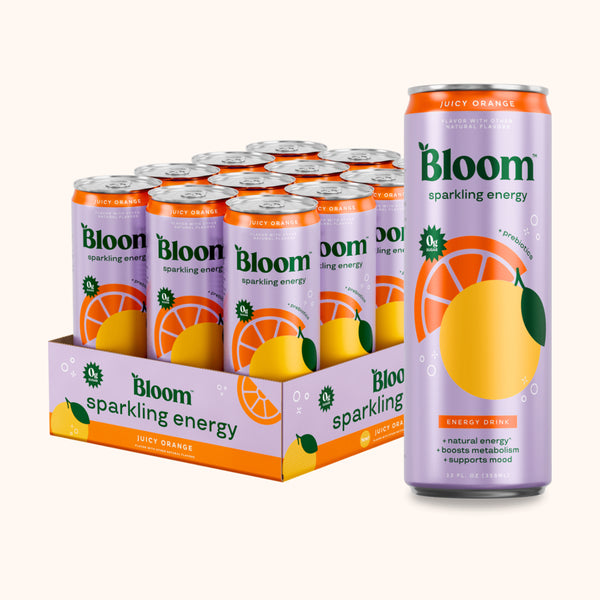
Bloom Sparkling Energy official product image. Product page: Bloom Nutrition.
If you are comparing Bloom vs Alani Nu, you are probably not looking for another vague “clean energy” ranking. You want to know which drink makes more sense for your routine, your caffeine tolerance, and the way you actually shop.
I would start with one important clarification: this comparison is about Bloom Sparkling Energy vs Alani Nu Energy. Bloom also sells Greens, hydration mixes, and pre-workout, while Alani Nu sells several different supplement categories. Bloom Greens and an Alani Nu energy can are not interchangeable products, so comparing the exact product matters.
My short version is this:
Bloom feels like the lighter, smaller, wellness-oriented option. Alani Nu feels like the stronger, more familiar energy-can option.
Both brands offer zero-sugar energy products, but the caffeine, can size, ingredient details, flavor style, and overall experience are different enough that I would not choose based only on the front of the can.
The quick answer
| If you want… | My pick | Why |
|---|---|---|
| A lower-caffeine starting point | Bloom Sparkling Energy | Bloom’s energy line is positioned as a lighter, 10-calorie, zero-sugar drink |
| A stronger energy hit | Alani Nu Energy | Standard Alani Nu cans are marketed with 200mg of caffeine per 12 fl oz |
| A smaller can | Alani Nu | The standard can is 12 fl oz |
| A wellness-focused brand experience | Bloom | The brand connects its energy products with greens, hydration, and broader wellness |
| More recognizable energy-drink flavor variety | Alani Nu | Alani has built a strong identity around sweet, candy-inspired and fruit-forward flavors |
| A drink for late afternoon | Bloom, depending on the label | I would choose the lower-caffeine option, but I would still check the exact can |
| A gym or early-morning boost | Alani Nu | The 200mg caffeine format is more suitable if I already know I tolerate it |
Bloom vs Alani Nu at a glance
| Category | Bloom Sparkling Energy | Alani Nu Energy |
|---|---|---|
| Format | Sparkling energy drink, including cans and smaller formats | Ready-to-drink energy cans |
| Sugar | Zero sugar | Zero sugar |
| Calories | 10 calories per can | 10 calories per 12 fl oz serving for Breezeberry |
| Caffeine | 100mg natural caffeine in Bloom’s 7.5 fl oz cans | 200mg per 12 fl oz serving for Breezeberry |
| Example label data | 7.5 fl oz: 10 calories, 0g sugar, 100mg caffeine | Breezeberry 12 fl oz: 10 calories, 0g sugar, 200mg caffeine, 180mg sodium, 5g carbs |
| Positioning | Energy, mood, metabolism, and mental focus | Energy, flavor, and a more conventional high-caffeine energy-drink experience |
| Best fit | Someone who wants a lighter-feeling energy drink or is more caffeine-conscious | Someone who wants a clearly noticeable caffeine serving |
| Main caution | “Wellness” language does not make caffeine irrelevant | 200mg is a substantial serving for caffeine-sensitive users |
Bloom Sparkling Energy: what I like about it
Bloom’s sparkling energy line is designed to feel less aggressive than a traditional energy drink. The brand describes it as a zero-sugar, 10-calorie drink with natural caffeine, B vitamins, and L-theanine, and positions it around energy, mood, metabolism, and mental focus. Bloom’s official product information states that its 7.5 fl oz cans contain 100mg of natural caffeine from green coffee bean extract.
That positioning makes sense for people who want something that fits into a broader wellness routine. Bloom is already associated with greens powders, hydration, pre-workout, and daily supplements, so its energy product feels like part of a lifestyle system rather than a single-purpose stimulant.
Bloom’s strengths
- It has a lighter, more wellness-oriented identity.
- The brand offers a wide range of fruit-forward flavors.
- The product is marketed as zero sugar.
- The sparkling format is easy to drink slowly.
- It may be a more comfortable entry point for someone who does not want a very strong caffeine hit.
I also like that Bloom gives me a reason to ask whether I need energy, hydration, greens, or pre-workout instead of treating every tired moment as the same problem.
Bloom’s limitations
The phrase “natural caffeine” should not be mistaken for caffeine-free or automatically gentle. The exact caffeine amount still matters.
Bloom also uses wellness language such as “metabolism” and “without the crash.” Those phrases may describe the intended product experience, but they do not guarantee how my body will respond. Sleep, food, stress, total caffeine intake, and individual sensitivity still matter much more than the marketing tone.
The main issue with Bloom is that the brand’s larger wellness ecosystem can make the product appear simpler or safer than it is. I would still read the label every time.
Alani Nu Energy: what I like about it
Alani Nu Energy is more direct. It is a ready-to-drink, zero-sugar energy can. The official Breezeberry label lists 200mg of caffeine per 12 fl oz, along with 10 calories, 0g sugar, 180mg sodium, and 5g total carbohydrate.
I appreciate that clarity. If I want a noticeable energy boost before a workout or during an early workday, I know I am choosing a substantial caffeine serving rather than a mild flavored drink.
The Breezeberry ingredient list includes taurine, L-theanine, caffeine, sodium citrate, L-carnitine L-tartrate, Panax ginseng root extract, guarana seed extract, and B vitamins. Exact formulations can vary by flavor and market.
Alani Nu’s strengths
- The caffeine amount is easy to understand.
- The 12-ounce can is compact.
- The flavors are bold and easy to recognize.
- It works well as an early-day or pre-workout energy option for people who tolerate 200mg.
- The brand has a strong presence in gyms, convenience stores, and social media.
Alani Nu is the option I would reach for when I want a proper energy drink rather than a lightly caffeinated sparkling beverage.
Alani Nu’s limitations
The obvious drawback is the caffeine. Two hundred milligrams is not a casual amount for everyone. Someone who is sensitive to caffeine may experience jitters, a racing heartbeat, anxiety, headaches, or sleep disruption.
The flavor intensity can also be a disadvantage. I enjoy a sweet, fruit-forward can occasionally, but I would find some flavors tiring if I drank one every day.
Finally, “zero sugar” does not mean the can is nutritionally neutral. It still contains caffeine and sweeteners, and the full ingredient list matters.
Alani Nu Breezeberry official product image. Product page: Alani Nu.
Caffeine is the deciding factor
This is where I would make the decision before thinking about flavors.
Choose Bloom when:
- You want to start with a lighter-feeling energy product.
- You are drinking it later in the day and want to limit your caffeine exposure.
- You prefer a smaller or less intense energy routine.
- You already use coffee, tea, pre-workout, or other caffeinated supplements.
Choose Alani Nu when:
- You want a clearly noticeable boost.
- You drink it early enough that it will not affect your sleep.
- You have already tested your tolerance to 200mg.
- You want a compact can for before training or a busy morning.
I would not use the words “strong” and “weak” as a quality ranking. A lower-caffeine drink may be better for someone who wants to remain focused without feeling over-stimulated.
The FDA says that up to 400mg of caffeine per day is an amount not generally associated with dangerous negative effects for most healthy adults, but sensitivity varies significantly. That is not a target, and caffeine from coffee, tea, supplements, medication, and energy drinks all counts.
Which tastes better?
Bloom and Alani Nu both lean into sweet, colorful flavors, but they have different personalities.
Bloom’s flavor range feels more like flavored sparkling wellness drinks. I would choose it when I want something bright and refreshing without the full soda-like intensity of a conventional energy can.
Alani Nu tends to go bigger on candy, fruit, and dessert-inspired flavor ideas. That makes the first sip exciting and the brand easy to remember, though some flavors may be too sweet for everyday drinking.
My advice is to buy singles before committing to a case. An energy drink can taste excellent once and become unpleasant by the tenth serving.
Which is better for workouts?
For a pre-workout energy boost, Alani Nu’s 200mg caffeine serving may appeal to people who already tolerate that amount. It is straightforward and convenient.
Bloom may be the better option if I want a lighter lift, especially for a morning walk, a moderate gym session, or a day when I have already had coffee.
Neither drink replaces water or electrolytes. If I am training for a long time, sweating heavily, or exercising in heat, I need to think about hydration separately. Energy is not the same thing as hydration.
I also would not test either drink for the first time immediately before an important workout or event. A new flavor is easy to try; a new caffeine response is less predictable.
Which is better for focus?
Both brands connect their formulas with focus, but I would keep the claim in perspective.
Caffeine can improve alertness and reduce the feeling of fatigue. Ingredients such as L-theanine may be included to complement the energy experience, but the presence of a focus ingredient does not guarantee a dramatic cognitive improvement.
For desk work, I prefer the product that gives me enough alertness without making me rush. That usually points me toward Bloom or a lower-caffeine option. If I am genuinely exhausted, neither drink fixes the underlying problem as well as sleep, food, movement, or a break.
Bloom Greens vs Alani Nu: do not compare these directly
This deserves its own section because the brands are often compared as if they sell the same thing.
Bloom Greens & Superfoods is a greens powder positioned around a blend of fruits, vegetables, fiber, prebiotics, probiotics, digestive enzymes, and other ingredients. It is not an energy drink equivalent to Alani Nu Energy.
If someone says “Bloom vs Alani,” clarify which Bloom product they mean:
- Bloom Sparkling Energy vs Alani Nu Energy: caffeine and ready-to-drink energy comparison
- Bloom Greens vs Alani Nu Energy: greens supplement versus energy drink—not a fair one-to-one comparison
- Bloom Pre-Workout vs Alani Nu Pre-Workout: stimulant, performance, and ingredient comparison
- Bloom Hydration vs Alani Nu energy products: hydration versus stimulation
Comparing the wrong categories is how shoppers end up buying a product for a job it was never designed to do.
Ingredient quality: how I read both labels
I would not call either brand “better ingredients” without defining what I am looking for.
If I want zero sugar
Both Bloom Sparkling Energy and Alani Nu Energy offer zero-sugar positioning. I would then compare calories, sweeteners, and how I feel after drinking them.
If I want lower caffeine
I would ignore the brand and compare the exact number per serving. Bloom’s 7.5 fl oz cans list 100mg, while Alani Nu Breezeberry lists 200mg in 12 fl oz.
If I want simple labeling
Alani Nu’s standard can is easy to understand from a caffeine perspective. Bloom’s broader wellness positioning makes it worth checking the exact product and serving size rather than assuming every Bloom drink works the same way.
If I am sensitive to ingredients
I would check sweeteners, natural flavors, added vitamins, and any ingredients I personally avoid. “Natural” is not a substitute for reading the ingredient panel.
Price and value
Bloom’s value makes the most sense if I am already interested in the brand’s broader wellness range and can buy a multi-pack or subscription.
Alani Nu’s value is simpler: I am paying for a ready-to-drink can with a known caffeine amount and no mixing. That convenience matters when I am already out of the house.
My practical rule:
- Compare cost per can for occasional use.
- Compare cost per serving for a regular habit.
- Include shipping and subscription pricing.
- Do not buy a large case until I know I enjoy the flavor.
- Treat high caffeine as a reason to drink less, not a reason to buy more.
Which one should you buy?
Choose Bloom if:
- You want a lighter, more wellness-oriented energy drink.
- You are already monitoring your total caffeine intake.
- You like sparkling fruit flavors.
- You prefer a brand that also offers greens and hydration products.
- You are looking for energy without making a 200mg serving your default.
Choose Alani Nu if:
- You want a stronger, clearly defined caffeine boost.
- You like bold, sweet, fruit-forward flavors.
- You want a compact 12-ounce can.
- You already know that 200mg of caffeine works well for you.
- You prefer the straightforward energy-drink experience.
Choose neither if:
- You are drinking energy products to compensate for consistently poor sleep.
- Caffeine causes anxiety, palpitations, headaches, or insomnia.
- You are stacking an energy drink with pre-workout, coffee, and caffeinated supplements.
- You are under an age or have a health condition where a healthcare professional has advised avoiding or limiting caffeine.
Final verdict
Bloom is the better choice for a lighter, wellness-oriented energy routine. Alani Nu is the better choice for a stronger and more predictable caffeine hit.
If I am choosing for everyday flexibility, I would lean Bloom—but only after checking the exact caffeine amount. If I am choosing for an early workout or a demanding morning, I would lean Alani Nu, provided I know I tolerate 200mg well.
My final ranking:
- Bloom Sparkling Energy for a lighter daily option
- Alani Nu Energy for stronger, ready-to-drink energy
- Bloom Greens only when the goal is greens supplementation—not as a replacement for either energy drink
The best choice is not the one with the most attractive can or the most convincing wellness language. It is the one whose caffeine level, flavor, ingredients, and timing fit your actual day.
Sources
- Bloom Sparkling Energy official page
- Bloom Greens & Superfoods official page
- Alani Nu Energy official product page
- FDA: Spilling the Beans—How Much Caffeine Is Too Much?
The exact formula, caffeine amount, serving size, and availability may vary by flavor, product line, and country. The nutrition examples above are for Bloom’s 7.5 fl oz can and Alani Nu Breezeberry’s 12 fl oz can; they are not universal brand-wide numbers. Check the package label before publishing or purchasing. This article is for general education and is not medical advice.
About the Author